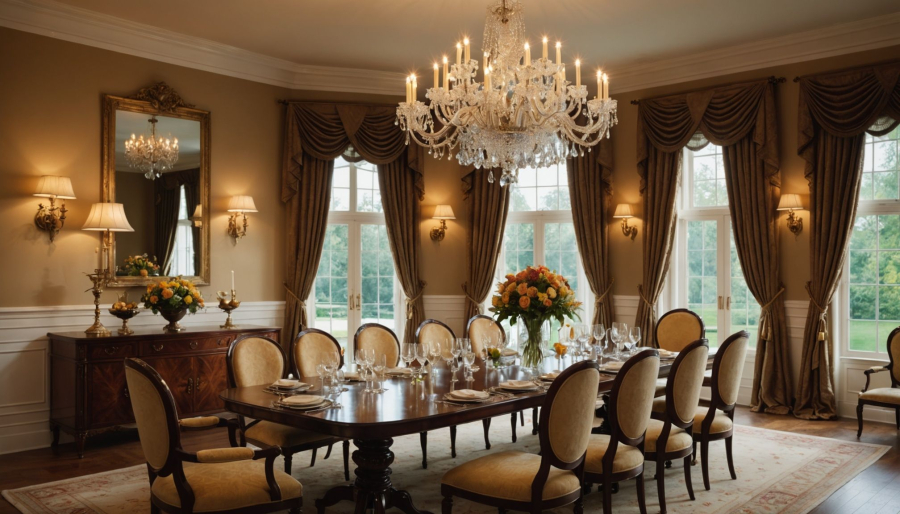
A dining room without a focal point isn't just underwhelming-it’s forgettable. Too many spaces treat lighting as an afterthought, hanging whatever fits the ceiling hook. But when a meal becomes a moment, when conversation lingers past dessert, it’s often because the light above has done its quiet work: shaping mood, drawing eyes upward, and anchoring the room in elegance. Few elements carry that weight like a true crystal chandelier.
The art of selecting a timeless center-piece
At the heart of every remarkable dining room lies a deliberate choice-not just in furniture or color, but in light. A chandelier is more than illumination; it’s a statement of intention. The finest pieces begin with material integrity. Mouth-blown crystal, shaped by hand and cut with precision, refracts light in a way that feels alive. This isn’t mere sparkle-it’s what connoisseurs callrefraction fire: a dance of prisms that transforms ambient light into something dynamic, almost musical.
Unlike mass-produced alternatives, hand-cut crystal carries subtle variations-imperfections that breathe soul into symmetry. Each facet is angled to maximize brilliance, a technique honed over centuries in the ateliers of northeastern France. This is where heritage meets intention: not just crafting a fixture, but composing a legacy.
Modern living demands more than beauty alone. Today’s discerning buyers seek pieces that honor tradition while embracing contemporary needs-like seamless integration into daily life. That’s why some collections now merge 18th-century silhouettes with modern dimmable systems, allowing one fixture to shift from morning clarity to evening warmth. For smaller rooms or lower heights, opting for a luxurious crystal ceiling light ensures brilliance without overwhelming the architecture.
Technical precision in crystal craftsmanship
The distinction between ordinary glass and true crystal lies in composition and execution. High lead content-when legally and ethically used-increases density, enhancing both weight and optical clarity. This allows for deeper cuts and more complex geometries, multiplying the number of facets that catch and bend light. The result? A fixture that doesn’t just glow, but projects patterns across walls and ceilings, especially at dusk.
Aligning aesthetics with heritage and modernism
Pairing a traditional chandelier with a minimalist dining table might seem contradictory, but it’s often the tension that elevates a space. A gilded, tiered piece above a matte oak surface creates visual dialogue-one that speaks of continuity, not clash. The key is balance: letting the chandelier dominate the vertical axis while keeping horizontal lines clean. It’s a nod to the French art de vivre, where luxury isn’t loud, but lived-in.
Perfect placement for optimal radiance
No matter how exquisite the fixture, poor placement diminishes its impact. A chandelier should guide the eye, not obstruct it. The goal is harmony between form and function-between beauty and usability.
Finding the ideal height over the table
As a rule of thumb, the bottom of the chandelier should sit between 30 and 36 inches above the tabletop. This range ensures visibility across the table while maintaining a sense of intimacy. Too high, and the light loses its warmth; too low, and it distracts from conversation. In rooms with taller ceilings, consider a longer stem or adjustable suspension to fine-tune the drop.
Scale and proportion: the golden rules
A chandelier should complement, not compete with, the dining table. A common guideline suggests the fixture’s diameter should be roughly 50 to 66 percent of the table’s width. This keeps the silhouette balanced. For a 72-inch table, a chandelier between 36 and 48 inches works best. The light should frame the table, not eclipse the people seated beneath it.
Wiring and structural safety considerations
Authentic crystal chandeliers are substantial-sometimes weighing over 50 pounds. Standard electrical boxes may not support this load. Reinforcing the ceiling junction box is not optional; it’s a necessity. Always consult a licensed electrician before installation. These are not disposable fixtures but heirlooms, and their mounting must reflect that permanence.
Chandelier styles compared for refined interiors
Choosing between classic and avant-garde
Style isn’t just about taste-it’s about atmosphere. A Baroque chandelier with cascading prisms sets a tone of formality and opulence, ideal for grand dinners. In contrast, a sleek ring of crystal with integrated LEDs suits a modern space where restraint conveys luxury. The choice influences everything from dinner party energy to everyday comfort.
| Style | Visual Impact | Best Table Match |
|---|---|---|
| Baroque | Ornate, multi-tiered design with abundant prisms; creates a dramatic, shimmering effect | Large rectangular or oval tables in formal dining rooms |
| Contemporary | Clean lines, often with concealed or integrated LED sources; understated brilliance | Round or square minimalist tables in open-plan spaces |
| Art Deco | Geometric symmetry, stepped forms, and bold angles; elegant but structured | Rectangular tables with lacquered or metallic finishes |
Installation and maintenance of your crystalline light
Bringing a crystal chandelier into your home is akin to welcoming a sculpture. The process matters as much as the outcome.
Preparing the dining room environment
Before unpacking, clear the space entirely. Dust and debris can scratch delicate surfaces during assembly. Always handle crystal with clean, lint-free gloves. Oils from bare hands leave residues that attract dust and dull clarity over time. Unboxing should be deliberate-each arm, chain, and prism accounted for in a calm, methodical manner.
Ongoing care for lasting brilliance
Dust the fixture regularly with a microfiber cloth or soft-bristled brush. For deeper cleaning, remove individual prisms if possible, and wash them in lukewarm water with a few drops of pH-neutral soap. Avoid harsh chemicals-ammonia or vinegar can erode metal mounts or cloud crystal over time. Reassemble only when completely dry. Annual maintenance preserves both lighting focal point integrity and resale value.
Maximizing the atmosphere with dimmable technology
Light isn’t static-and neither should your chandelier be. Modern fixtures offer more than beauty; they offer control.
The role of shadows in dining aesthetics
Dimming a crystal chandelier changes more than brightness-it alters the quality of shadow. At full power, the room feels vibrant, ideal for brunch or gatherings. Lowered, the light becomes ambient, with prisms casting delicate patterns that mimic candlelight. This transition enhances intimacy, making the same space feel different at 8 PM than at noon.
Selecting the right bulb temperature
Warm white bulbs (between 2700K and 3000K) complement clear and tinted crystal best, enhancing warmth without muting sparkle. High-CRI (Color Rendering Index) bulbs-those above 90-reveal true colors on the table, making food look richer and skin tones more natural. LED technology now delivers this quality with minimal heat and long lifespan, protecting delicate crystal mounts.
Integrating luxury into smart home systems
The most advanced crystal lighting can sync with home automation. With compatible hubs, you can program scenes: “Dinner,” “Celebration,” “Morning Coffee”-each adjusting brightness, color temperature, and even timing. This isn’t just convenience; it’s curation. The chandelier becomes a responsive element in a living environment, not just a fixture.
- Install a compatible dimmer switch to unlock full ambiance control
- Choose high-CRI bulbs for accurate color representation and warmth
- Adjust hanging height to influence shadow play and spatial perception
- Complement with peripheral sconces or floor lamps for layered lighting
- Clean prisms regularly to prevent dust from scattering light and reducing clarity
FAQ
Can I install a grand chandelier in a compact urban dining space?
Absolutely-proportion and profile matter more than size. Opt for a smaller diameter or a flush-mount crystal ceiling light to maintain headroom and visual balance. The key is choosing a piece with enough presence to serve as a focal point without overwhelming the room’s volume.
How do I ensure the crystal prisms don't vibrate or chime from nearby traffic?
Secure mounting is essential. High-end fixtures often include dampening gaskets or flexible suspension systems to absorb vibrations. For city apartments near transit lines, consider models designed with stability in mind, and ensure the ceiling box is properly reinforced during installation.
What is the difference between Swarovski and hand-cut lead crystal for lighting?
Swarovski crystals are precision-engineered for uniformity and brilliance, ideal for consistent sparkle. Hand-cut lead crystal, however, offers weight, depth, and subtle variations that reflect artisanal skill-each piece unique, with a warmth and soul that machine production can’t replicate.
